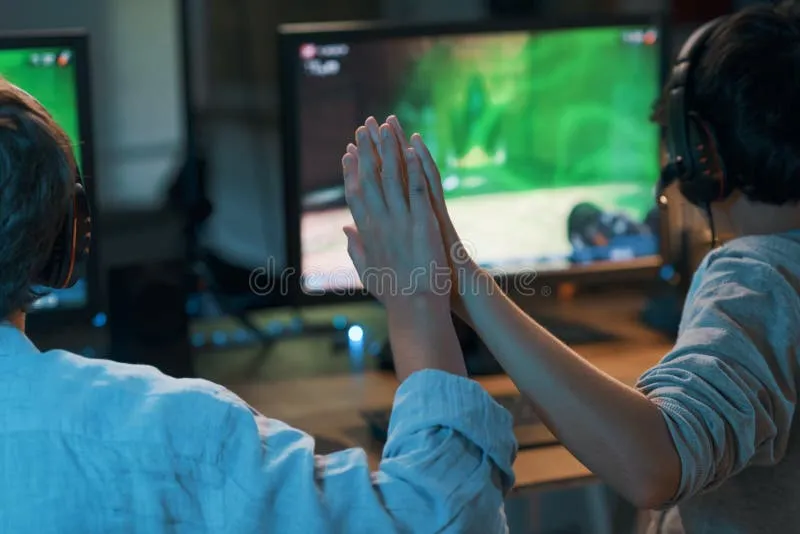
Side-by-Side and Spilling Everything: The Weird Therapy Hidden Inside Your Gaming Sessions

Somewhere between the third dungeon boss and a failed stealth mission, you told your gaming buddy about the fight you had with your dad. You weren't planning to. Nobody scheduled a feelings debrief. It just... happened. One minute you were strategizing about inventory management, and the next you were somehow talking about your fear of failure and why you always self-sabotage when things get good.
And here's the wild part — it didn't feel weird at all.
Welcome to the accidental therapy session that lives inside every great gaming friendship. No couch required. No $200-an-hour copay. Just two people, a shared objective, and the strangely fertile emotional soil that video games somehow create.
The Secret Ingredient: Not Looking at Each Other
Psychologists have known for a while that people open up more easily when they're not making direct eye contact. It's why teenagers talk to their parents more openly during car rides than at the dinner table. It's why bartenders hear things that best friends never do. There's something about a shared focus — a windshield, a counter, a glowing television screen — that lowers the social guard just enough for real stuff to slip through.
Gaming is basically engineered for this. You're both staring forward. You're both nominally busy. The game gives you permission to not be fully present in the conversation, which, paradoxically, makes you more honest in it. You're not performing a feelings chat. You're just talking while doing something else, which removes approximately 90% of the pressure that makes vulnerability feel terrifying.
The result? People say things in gaming sessions that they'd never say sitting across a table at Applebee's.
The Pause-and-Play Rhythm of Real Talk
Here's another thing gaming does that most social settings don't: it creates natural breaks. The loading screen. The cutscene. The moment between rounds where everyone's respawning and nobody has anything tactical to say. These micro-pauses are conversational on-ramps, and they show up constantly.
In a normal hangout, silence is awkward. You feel pressure to fill it with something witty or relevant. But in a gaming session, silence is just... the loading screen. Nobody's judging you. And when someone does say something real — something unexpectedly honest — it lands differently because it wasn't forced into a scheduled conversation slot. It emerged organically, the way the best revelations usually do.
That rhythm of task, pause, talk, task, pause, talk is basically a low-stakes emotional workout. By the time you've been gaming together for two hours, you've had fifteen micro-conversations that would have taken months to have any other way.
Shared Stakes Create Shared Trust
There's also something deeply bonding about needing each other. Co-op gaming, in particular, builds trust fast because you are literally dependent on another person to achieve something. When your teammate covers your flank, revives you at the last second, or holds aggro so you can execute the plan — that's not just gameplay. That's a tiny rehearsal for relying on someone.
And trust, once it starts building in one area, tends to bleed into others. You trusted them with your character's survival. Suddenly, trusting them with the thing your boss said that made you feel like garbage doesn't seem like such a leap.
This is why gaming friendships often have an intensity to them that confuses people on the outside. "You've only known this person for six months" is something gaming friends hear a lot — usually from people who have never experienced the particular alchemy of surviving a brutal raid together and then somehow ending up talking about your anxiety until 2 a.m.
The Game as a Pressure Valve
One of the underrated functions of the game itself is that it gives both people somewhere to look when things get emotionally heavy. You drop something real, the other person absorbs it, and then — conveniently — something explodes on screen and you both have an excuse to redirect attention while the emotional dust settles.
This is not avoidance. It's actually a pretty healthy processing rhythm. Say the thing. Let it land. Breathe. Shoot some zombies. Return to the thing when you're ready. Repeat.
Traditional conversation doesn't give you that buffer. You say something vulnerable and then you're just sitting there, watching someone's face, waiting for their reaction in real time. That's a lot of pressure. Gaming removes the fishbowl effect and replaces it with something that feels a lot more like talking to a friend on a long drive — where the words matter, but nobody has to perform their listening.
Why This Kind of Friendship Hits Different
Gaming friendships get undersold constantly. People outside the culture tend to see them as shallow — "you just play games together" — without understanding what just playing games together actually means in practice. It means hours of shared experience. It means celebrating wins and absorbing losses together. It means laughing at the same ridiculous moments and getting frustrated by the same infuriating mechanics.
All of that shared emotional texture adds up to something real. And when you layer in the accidental vulnerability that gaming sessions seem to generate almost automatically, what you end up with is a friendship that often feels deeper than ones built through more conventional means.
Your gaming buddy might know that you're scared of commitment, that you still haven't processed your college years, and that you secretly want to change careers — not because you sat them down for a serious talk, but because all of that came out between boss fights over the course of a year of Tuesday nights.
So What Do You Do With This?
Honestly? Nothing dramatic. You don't need to turn your gaming sessions into therapy circles or start scheduling emotional check-ins alongside your raid schedules. The whole point is that it works because it's not forced.
But it's worth recognizing what your gaming friendships actually are. They're not lesser relationships because they were built around a controller. In a lot of cases, they're deeper precisely because of the controller — because the game created the conditions for honesty that regular life rarely hands you for free.
So the next time you're three hours into a session and your buddy starts talking about something real, don't be surprised. Don't make it weird. Just keep playing, keep listening, and maybe — if the moment feels right — say the thing you've been meaning to say too.
The loading screen will cover the awkward silence. It always does.