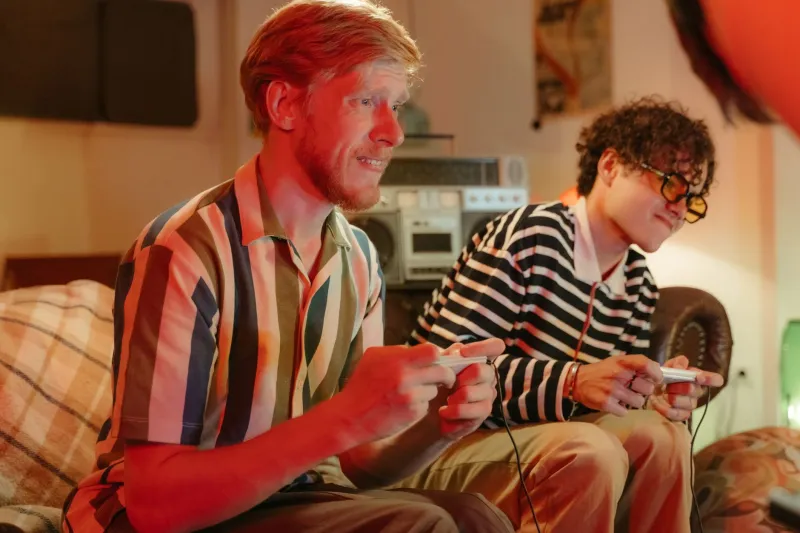
No Controller? No Problem: The Underrated Art of Watching Someone Else Game

Photo by Photo by Vitaly Gariev on Unsplash on Unsplash
Picture this: It's a Friday night, somebody's got a brand-new game loaded up on the TV, and half the people in the room don't even have a controller. They're sitting on the couch, snacks in hand, hollering suggestions, gasping at boss fights, and laughing so hard someone nearly spills their drink. Are those people gaming?
Absolutely. One hundred percent. And anyone who says otherwise can go touch a loading screen.
There's a weird gatekeeping culture that sneaks into gaming spaces sometimes — this idea that unless your thumbs are actively mashing buttons, you're not really participating. But that argument falls apart the second you actually sit in a room full of people watching one person navigate a horror game at 11 PM. The screaming alone proves everyone is very invested.
The Couch Has Always Been a Community Space
Long before Twitch turned gaming spectatorship into a billion-dollar industry, American living rooms were already doing the same thing on a smaller, cheesier scale. Kids would crowd around one Game Boy. Siblings would trade the controller after every death. Someone's dad would watch from the doorway for "just a minute" and end up staying for two hours.
Watching games has always been social. The platforms just got fancier.
What makes couch spectating so genuinely fun is the shared emotional experience. When the person holding the controller makes a terrible decision — and they will, they always do — everyone in the room reacts together. That collective groan, that unified "NOOO," that spontaneous burst of chaotic advice? That's community. That's connection. That's honestly some of the best entertainment a living room can produce.
Backseat Gaming Is a Love Language
Okay, yes, unsolicited advice can be annoying in most areas of life. But in gaming? Backseat gaming is practically a tradition.
"Go left." "Check behind you." "WHY did you use your last potion there?!" These are not criticisms — they are participation. The person watching is mentally in the game just as much as the person playing. Their brain is working through puzzles, anticipating threats, and processing the story. They're just doing it from a slightly more comfortable position with better snack access.
Research actually backs this up. Watching others perform a skill activates similar neural pathways to performing that skill yourself — it's why sports fans feel physical tension during a close game. Gaming spectatorship works the same way. Your heart rate spikes. Your palms get a little sweaty. You flinch when the character takes a hit. Your body doesn't care that you're not the one holding the DualSense.
The Social Dynamics Are Genuinely Unique
Here's something that doesn't get talked about enough: watching someone else play a game creates a totally different social dynamic than playing yourself. When you're the one in the hot seat, you're focused — head down, brain locked in. But when you're watching, you're free to talk.
You comment on the story. You debate whether a character made the right call. You share theories about what's going to happen next. You laugh at the physics glitches. You bond over shared reactions to plot twists. It's basically the gaming equivalent of watching a movie together, except the movie makes different choices depending on who's watching and what ridiculous suggestions the couch crew is shouting.
This is especially powerful when you've got a mixed group — hardcore gamers and total newcomers sharing the same couch. The newcomer who "doesn't really play games" suddenly finds themselves deeply invested in whether this fictional knight is going to survive the next five minutes. That's the magic. Games have a way of pulling people in whether they planned on it or not.
Streaming Made It Official, but Your Living Room Did It First
Twitch, YouTube Gaming, and the broader streaming world didn't invent gaming spectatorship — they just scaled it up and gave it ad revenue. Millions of people watch gaming content every single day, not because they can't play themselves, but because watching someone else play is genuinely entertaining. Sometimes more entertaining, honestly.
A skilled streamer or even just a charismatic friend playing through a game can make that experience richer than going it alone. Their reactions become part of the content. Their commentary adds layers. The community in the chat — or on the couch — becomes a character in its own right.
And there's something specifically great about watching a game you've already played. You get to be the smug one in the corner who knows exactly what's coming, barely containing your excitement as someone else walks straight into the trap you also walked into, just six months ago.
It's Also a Perfectly Valid Way to Experience Games You'll Never Play
Let's be real: some games are incredible experiences that certain people will never personally play. Maybe the genre isn't their thing. Maybe the difficulty is prohibitive. Maybe they just don't have the time to commit to a 60-hour RPG. Watching someone else run through that game — whether in person or via a YouTube playthrough — is a completely legitimate way to engage with gaming culture.
You can follow the story of a sprawling open-world adventure without ever picking up a controller. You can appreciate the artistry of a brutally difficult platformer without subjecting yourself to the actual brutality. You can experience the emotional gut-punch of a narrative game's ending right alongside someone else, sharing the moment in real time.
That's not a lesser experience. That's just a different one.
Drop the Hierarchy, Keep the Fun
At BiuACG, we're pretty firmly in the camp that gaming is for everyone — and "everyone" includes the people on the couch without a controller. The person watching, laughing, gasping, and shouting terrible advice is contributing to the experience just as much as the person playing. They're keeping the energy up. They're making it social. They're turning what could be a solo activity into something shared.
Gaming doesn't have a velvet rope. There's no bouncer checking whether you've logged enough hours or own enough titles before you're allowed to enjoy the experience. If you're in the room, you're in the game.
So next time someone tries to tell you that watching doesn't count, just remind them: the loudest person in the room during that final boss fight wasn't the one holding the controller. And honestly? They had the most fun.