Skip the Small Talk: Why Multiplayer Games Make You Best Friends in 20 Minutes Flat
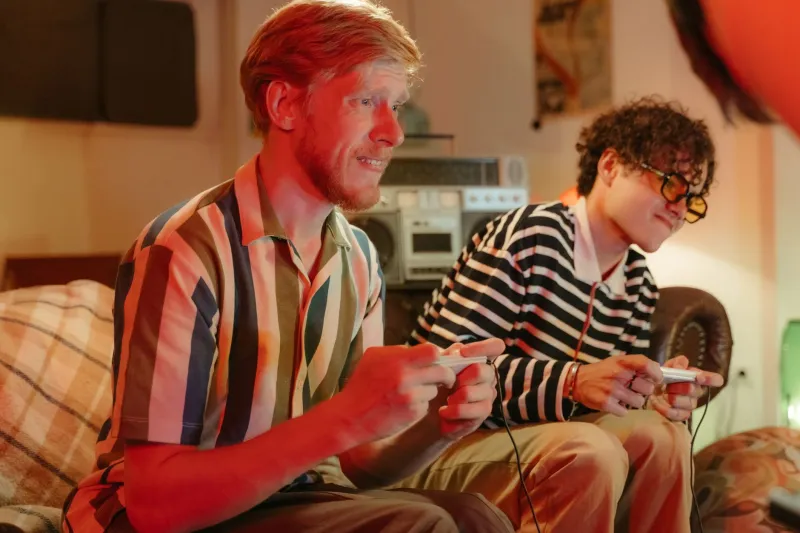
Think about the last time you made a genuinely new friend as an adult. Not a coworker you grab lunch with out of proximity, not a neighbor you wave at from the driveway — an actual, text-them-at-midnight, know-your-whole-deal friend. For most people over 25, that memory is hazy at best. Adult friendship is notoriously hard. It's slow, it's awkward, and it involves approximately nine hundred conversations about the weather before anyone admits they're lonely.
Now think about your gaming crew. The people you queue with on Friday nights. The Discord server that somehow turned into a genuine support network. Odds are, those bonds formed at a speed that would make your therapist raise an eyebrow.
So what's actually going on here?
The Problem With Adult Socializing (Hint: It's Painfully Boring)
Here's the thing about how adults are supposed to make friends: it's deeply, structurally broken. You're expected to bond over passive shared experiences — sitting in the same meeting, attending the same barbecue, existing near someone long enough that familiarity eventually masquerades as connection. There's no pressure, no stakes, no real reason to reveal anything meaningful about yourself.
Psychologists call this the "mere exposure effect" — basically, we tend to like people we see repeatedly. It works, but it's slow. It can take months of low-stakes proximity before two adults feel comfortable enough to drop the performance and just be real with each other.
Gaming skips that entire queue.
Why a Dungeon Does More Work Than a Dinner Party
Multiplayer games, almost by accident, engineer the exact conditions that psychologists say accelerate genuine bonding. Let's break it down.
Shared stakes. When you're running a strike in Destiny 2 or holding a point in Overwatch, everyone in that lobby has something on the line. It's not life or death, obviously, but your nervous system doesn't always know that. The mild stress of a tough encounter triggers the same neurochemical cocktail — adrenaline, focus, the warm flood of relief when you pull it off — that humans have historically associated with surviving something together. That shared experience creates a memory. And shared memories are the raw material of friendship.
Forced communication. You can't successfully coordinate a five-player boss fight through polite small talk. You have to communicate clearly, quickly, and honestly. You learn how someone handles pressure. You learn whether they blame teammates or take responsibility. You learn if they can laugh at themselves after a wipe. In 45 minutes of gameplay, you gather more genuine personality data on a person than you'd collect in six months of office interactions.
Productive vulnerability. This one's underrated. Games let you fail in front of people. You miss a shot, you make a bad call, you accidentally lead the whole team off a cliff in Minecraft (we've all been there). And then — critically — you laugh about it, learn from it, and keep going. That's vulnerability in a low-stakes container. It's practice for the real stuff. And when you've already seen someone handle failure with grace and humor, trusting them with bigger things feels a lot less scary.
The "Foxhole" Effect, Explained Without the Drama
There's a concept sometimes called the "foxhole bond" — the intense closeness that forms between people who face adversity together. Historically, it's been studied in military contexts, but researchers have found that the underlying mechanism doesn't actually require life-or-death circumstances. What it requires is perceived shared challenge, mutual dependence, and a reason to care about each other's success.
Sound familiar? A tough raid, a ranked match where everyone's grinding for promotion, a co-op campaign on hard difficulty — these are foxholes with respawns. The emotional architecture is the same. You need each other. You communicate. You celebrate wins and absorb losses as a unit. The friendship that comes out of that isn't a coincidence. It's chemistry, deliberately triggered.
What This Means If You're Struggling to Connect IRL
If adult friendship has felt impossible lately — and statistically, you're not alone, given that loneliness rates in the US have been climbing for years — gaming isn't just a distraction from that problem. It might actually be a solution to it.
Finding a consistent gaming group, joining a community Discord, or even just being a reliable teammate in a regular co-op session gives you the repeated contact, shared stakes, and communication practice that adult socializing usually strips out. You don't have to be witty at a cocktail party. You just have to show up, play your role, and be someone worth queuing with again.
And here's the thing: the skills transfer. The people who've gotten good at communicating under pressure in games tend to get better at it everywhere. The comfort with vulnerability you build laughing at your own mistakes in a game lobby slowly bleeds into how you handle real-life awkwardness. It's not therapy — but it rhymes with it.
The Unspoken Rules That Make It Work
Not every gaming interaction becomes a lasting friendship, obviously. What separates the lobbies that stay lobbies from the ones that become something more?
Consistency matters enormously. Showing up regularly — same server, same weekly session, same Discord — creates the repetition that lets trust accumulate. One-off matchmaking rarely produces deep bonds because there's no continuity.
Investment in the other person's experience also counts for a lot. The players who become genuine friends are usually the ones who notice when a teammate is having an off night, who crack a well-timed joke to cut tension, who stick around after the match to chat. It's not complicated — it's just basic human decency, applied in a context where it's actually easy to practice.
And finally: being willing to play outside your comfort zone. Trying a genre you're bad at, joining a group where you're clearly the weakest player, saying yes to a game night even when you're tired — these small acts of social courage are exactly what adult friendship requires, just packaged in a way that feels a lot less terrifying than, say, going to a networking event alone.
Play More, Connect More
The gaming community has known this intuitively for years, even if the language around it was always "these are just my online friends" with an apologetic shrug. But there's nothing just about it. The bonds formed over shared challenges, dumb in-jokes, and 2 AM victory screens are as real as any friendship formed in a classroom or a bar — and they often form faster, deeper, and with considerably less small talk about the weather.
So the next time someone implies that gaming is a substitute for real connection, you can politely inform them that your raid team has seen you at your most stressed, your most ridiculous, and your most genuinely joyful — and they still showed up next Friday. That's not a consolation prize for real friendship. That is real friendship.
Now go find your people. The lobby's open.