Group Chat Gaming: The Hidden Price Tag on Playing With Your People (And Why You'll Pay It Anyway)

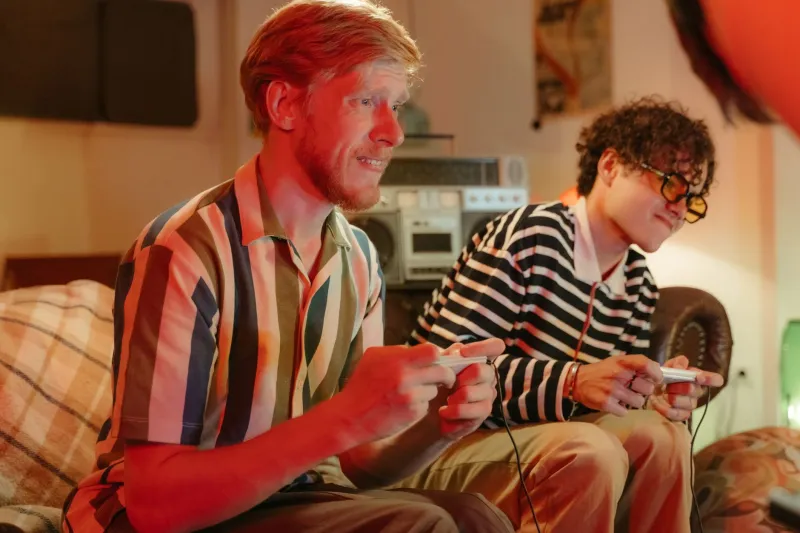
Photo by Photo by Vitaly Gariev on Unsplash on Unsplash
Let's set the scene. You finally got your gaming budget under control. One game, one subscription, one very responsible adult decision. Then your group chat explodes. Someone bought that new co-op title. Someone else upgraded to the latest console. Now there's a battle pass involved, a Discord Nitro suggestion, and somehow you're staring at a $70 purchase you absolutely did not plan for.
Welcome to the Friendship Tax.
It's real, it's sneaky, and it has claimed the wallets of even the most disciplined gamers. But before you rage-quit your social life and retreat into a single-player cave forever, let's actually look at what you're paying for — and whether the math makes more sense than it first appears.
What Is the Friendship Tax, Exactly?
The Friendship Tax is the cumulative, often unexpected cost of keeping your gaming life socially compatible with the people you actually want to play with. It shows up in a few distinct flavors:
The Platform Problem. Your whole crew just migrated to PC. You're on PlayStation. Suddenly your console — which was perfectly fine last week — feels like a liability. Cross-play has helped here, but it hasn't solved everything. Some games still wall off platforms from each other, and if your friends are all on the same team, you want to be on that team.
The Battle Pass Spiral. One person in the group buys the season pass. Then another. Then everyone's unlocking exclusive cosmetics and suddenly your default skin looks like you showed up to prom in cargo shorts. Nobody forces you to buy in, but the subtle social pressure of being the only one without a matching squad skin is a very real psychological phenomenon.
The DLC Domino Effect. An expansion drops. It's only $15. But if three people in your group own it and you don't, you're suddenly locked out of half the content they're playing. The $15 stops being optional.
The Subscription Stack. Xbox Game Pass, PlayStation Plus, Nintendo Online, and whatever streaming service is currently hosting the game everyone's obsessed with — these monthly fees add up quietly in the background like a subscription you forgot to cancel but actually really need.
The Solo Player's Budget Advantage (And Its Lonely Ceiling)
Here's the thing: if you game alone, you have almost total financial control. You buy what you want, when you want, on whatever platform suits you. You wait for sales. You finish one game completely before touching another. It's tidy, it's economical, and it's also — if we're being honest — a little like eating dinner alone at a table that fits six.
Single-player games are incredible. Nobody here is arguing otherwise. But the return on investment for solo play is largely personal. You get the story, the satisfaction, the escape. What you don't get is the group chat blowing up at midnight because someone accidentally triggered a boss fight while everyone else was still looting.
That chaos? That's the product. And it doesn't exist in solo mode.
Smarter Ways to Pay the Tax Without Going Broke
Accepting that social gaming costs more doesn't mean you have to hemorrhage money every time someone in your crew discovers a new obsession. There are genuinely practical ways to manage this:
Rotate the buyer. If your group regularly plays co-op games, take turns being the one who buys the new release first. Everyone else waits to see if it's worth it, then purchases when it goes on sale. One person takes the full-price hit; everyone else gets a discount.
Communicate before you commit. The group chat should be a democracy, not a dictatorship. Before anyone drops $60 on a new game expecting the whole squad to follow, float it first. A quick "would everyone actually play this?" saves a lot of resentment.
Lean into free-to-play titles. The free-to-play market in 2024 is genuinely stacked. Games like Warframe, Path of Exile, and Genshin Impact offer hundreds of hours of content with zero entry fee. The cosmetic monetization is real, but it's optional in a way that actually holds up.
Share a Game Pass family plan. Microsoft's family subscription options exist specifically to solve this problem. Split the cost, share the library, everybody wins. Same logic applies to PlayStation Plus if your group is on Sony's ecosystem.
Set a social gaming budget. Treat it like a night out. You wouldn't go to dinner with friends and be shocked that it cost money — same principle applies here. Allocate a monthly "playing with people" budget and stick to it. When it's gone, it's gone.
Why the Investment Pays Off Anyway
Here's where the math gets interesting. Think about the last time you finished a game you loved solo. You got the ending, maybe felt some feelings, possibly told one person about it who nodded politely. That's a complete experience.
Now think about the last time something genuinely ridiculous happened in a multiplayer session with your friends. The moment someone drove the vehicle off a cliff. The accidental team kill that ended a perfect run. The voice chat going completely silent right before everyone started screaming. Those moments don't just live in your memory — they become stories. Inside jokes. The foundation of friendships that extend well beyond the game itself.
Research consistently backs this up: shared experiences create stronger social bonds than individual achievements. You're not just buying a game when you invest in social gaming. You're buying the raw material for actual human connection, which — as it turns out — is pretty hard to put a price on.
The Friendship Tax isn't a bug in social gaming. It's a feature. It's the cost of admission to experiences that solo play simply can't replicate.
The Bottom Line
Yes, gaming with your crew costs more than gaming alone. Sometimes significantly more. The platforms need to match, the subscriptions need to stack, and occasionally someone's going to suggest a battle pass purchase that you'll definitely regret less than you expect.
But the return? The return is a group of people who know your playstyle, who've seen you fail spectacularly and showed up anyway, who text you at 11 PM because they found a new game and immediately thought of you.
That's not an expense. That's an investment. Pay it cheerfully, budget for it wisely, and never let anyone make you feel weird for spending money on the thing that makes gaming feel like more than just a hobby.
Now go check your group chat. Someone's probably already posted a trailer.