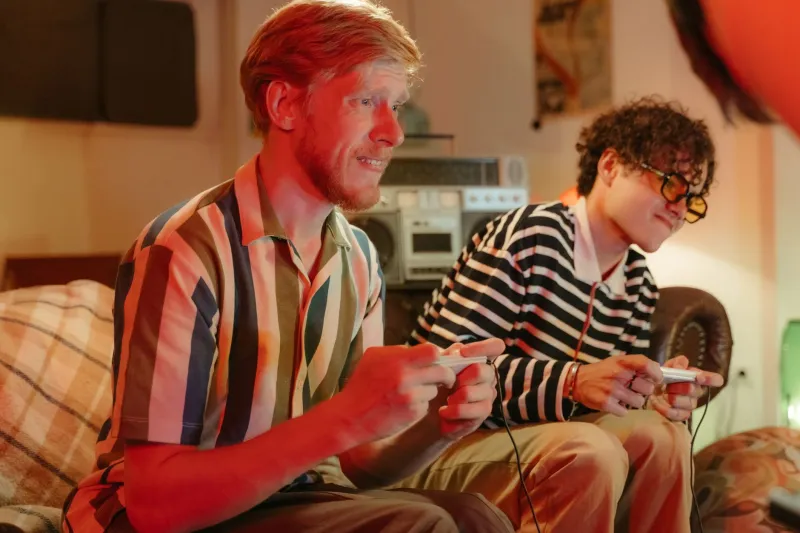
Your Neighbors Don't Know Your Gamer Tag (And Honestly, That's Fine)
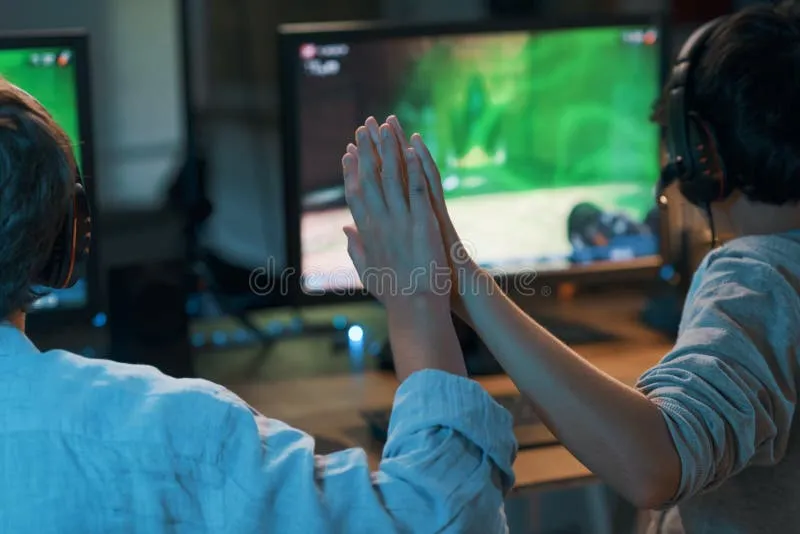
Photo: friends gaming together online Discord headset laughing, via thumbs.dreamstime.com
Let's do a quick mental inventory. How many times have you talked to your next-door neighbor this month? Now how many times have you hopped into a voice channel with your gaming crew, laughed until something came out of your nose, or stayed up way too late strategizing, roasting each other, and accidentally getting weirdly emotional about a fictional storyline?
Yeah. The math isn't close.
This isn't a knock on your neighbors. They're probably perfectly nice people who take their trash cans in on time and wave back when you wave first. But there's a reason your Discord squad knows your coffee order, your deepest fear about ranked matches, and exactly which sound you make when you get sniped from across the map — and your neighbors don't even know your last name.
Welcome to the Friendship Paradox of modern gaming life.
Proximity Is Overrated (Sorry, Suburbs)
For most of human history, your social circle was basically whoever lived within walking distance. Your neighbors were your people by default — not necessarily by choice. That system worked fine when "going somewhere" required a horse and a full day.
But here's the thing about proximity-based friendships: they're built on convenience, not compatibility. You and your neighbor might share a property line and a mild concern about the HOA's new mulch policy, but that doesn't mean you have anything in common.
Online gaming flips this entirely. Your Discord squad found each other because you were all drawn to the same games, the same playstyles, the same chaotic energy at 11 p.m. on a Tuesday. That's self-selected compatibility — which, psychologically speaking, is a much stronger foundation for genuine connection than "we both get our mail from the same cluster of boxes."
Researchers who study social bonding have found that shared experiences — especially emotionally charged ones — accelerate closeness faster than almost anything else. And if you think surviving a raid wipe together or clutching a win in the final ten seconds doesn't qualify as emotionally charged, you've clearly never played with a full squad screaming in your headset.
Why Gaming Builds Bonds Faster Than a Backyard BBQ
There's actual science behind why your gaming friendships feel so real, even if you've never met IRL. A few things gaming does really well:
It creates shared stakes. When you're all invested in the same outcome — winning, surviving, completing a quest — you're experiencing something together. That collective tension and release is the same chemistry that bonds soldiers, sports teams, and improv comedy troupes. Your raid party is basically a platoon with better snacks.
It removes social performance pressure. In-person hangouts come with a whole production: What do you wear? Where do you look? Did that joke land? Online, you're just a voice and a username. The social armor comes off faster, and people tend to be more honest, more weird, and more themselves. That's where real friendships actually start.
It gives you a reason to show up consistently. Friendship, like a plant or a sourdough starter, needs regular attention. Gaming sessions give you a built-in recurring reason to connect — a schedule, a ritual, a standing appointment that doesn't require anyone to plan a dinner party or remember to text first.
It lets you see people under pressure. You learn a lot about someone when they're tilted at 2 a.m. and the squad just lost for the fifth time. Do they blame everyone else? Do they laugh it off? Do they quietly regroup and say "okay, one more"? That's character. And you get to see it every session.
But Wait — Should You Feel Weird About This?
Look, if you've ever felt a little guilty that you'd drop everything for a friend you've only ever seen in a Discord profile picture but can't remember the last time you knocked on your neighbor's door — you're not alone. American culture has a complicated relationship with online friendships. There's still a persistent idea that "real" friendships require physical presence, shared geography, or at minimum, a handshake at some point.
That idea is mostly nostalgia wearing a Norman Rockwell costume.
Friendships are real when they involve mutual care, consistent presence, and genuine understanding of who someone is. By those metrics, a lot of gaming squads are running laps around the average neighborhood relationship. Nobody's handing out trophies for living within five miles of each other.
That said — and here's where we get a little balanced about it — your local community still matters. Not because proximity automatically creates depth, but because in-person relationships offer things digital ones genuinely can't: a hug when things go sideways, someone to grab food with at midnight, a human who can show up at your door when you need it. Both kinds of connection serve different needs, and being honest about that is actually healthy.
Practical Ways to Hold Both Worlds Without Dropping Either
So you've got a thriving online crew and a neighborhood where you mostly just wave at people from your car. Here's how to stop treating those as competing realities:
Stop ranking your friendships. Your Discord squad isn't a replacement for IRL connection, and your local friends aren't a backup plan when the servers go down. They're just different flavors of the same human need. Let them coexist without a hierarchy.
Consider bridging the gap — when it makes sense. Some of the best gaming friendships have eventually turned into real-world meetups, road trips, or at minimum, a shared Google Doc of inside jokes. If your online crew has a gravitational pull that strong, maybe lean into it. Regional gaming meetups and conventions exist for exactly this reason.
Use gaming as a social entry point locally. If you actually want to know your neighbors better, games are a shockingly effective icebreaker. A backyard Mario Kart tournament, a neighborhood trivia night, a casual board game setup — shared play creates the same bonding chemistry in person. You're basically running the same experiment your Discord crew already proved works.
Don't apologize for where your people are. If your most meaningful social support right now comes from people you met in a game lobby, that's not a consolation prize. That's just where your people happened to be. The internet is a big place, and sometimes it delivers exactly the right humans to exactly the right username.
The Scoreboard Nobody Talks About
At the end of the day, the question isn't whether online friendships are "as valid" as in-person ones — that debate is over, and the answer is yes. The real question is whether you're actually showing up for the people who matter to you, wherever they happen to exist on the map.
Your neighbors might not know your gamer tag. Your Discord squad might not know what your apartment looks like. Neither of those facts makes the connection less real.
Play more, stress less, and maybe — just maybe — send your squad a message right now. Not because you need something. Just because they're your people.
That's worth more than any property line.