Ping Me Happy: The Tiny Sound Effects Your Brain Can't Quit
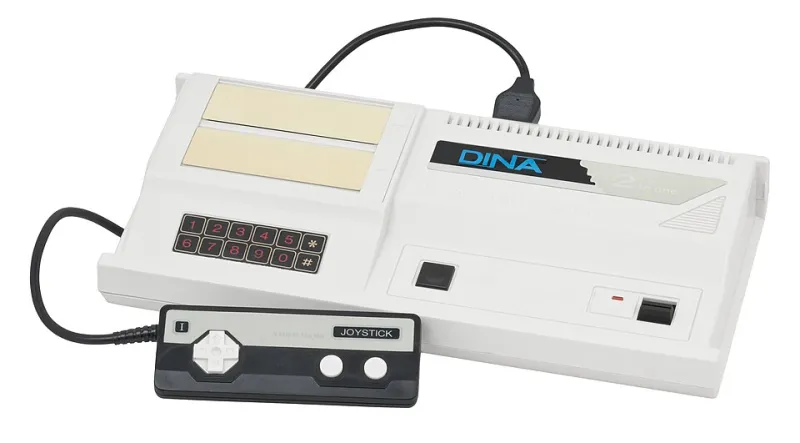
Photo: Evan-Amos, CC BY-SA 3.0, via Wikimedia Commons
There's a sound you know by heart. It doesn't matter if you're 15 or 45, whether you play on a gaming PC or your phone on the bus — that quick, bright little ping when you grab a coin, land a headshot, or clear a line is burned into your brain. It's the sound of a job well done, even when the job took exactly 0.4 seconds.
We here at BiuACG are obviously partial to the "biu" — it's the sound of a tiny laser, a tiny win, a tiny moment of yes. And it turns out there's real science behind why your brain loves it so much.
Your Brain Is a Reward-Hungry Machine
Let's talk dopamine — the neurotransmitter everyone blames for their bad habits. Despite the memes, dopamine isn't the "pleasure chemical." It's the anticipation chemical. It fires not when you get the reward, but in the moments leading up to it and right as you realize it's coming.
That's why the sound effect matters more than the reward itself. Collecting a coin does nothing for you materially. But the ping tells your brain, "Success registered. Do it again." It's a feedback loop so tight it borders on a conversation between you and the game, with the sound effect acting as the game saying "good job" in the world's most efficient language.
Psychologists call these micro-feedback loops: short cycles of action, result, and reward. Games are the only medium that can run hundreds of these loops per hour. A movie gives you a payoff every 20 minutes. A novel, maybe once per chapter. A game like Tetris gives you one every few seconds. No wonder Tuesday disappears.
The Engineering of a Perfect 'Biu'
Game audio designers are not messing around. That coin sound in Super Mario Bros.? Designed by Nintendo legend Koji Kondo to sit in a bright, high frequency range that cuts through the music and lands cleanly in your ear. It's short enough to never annoy, pleasant enough to hear a thousand times.
Different genres pull different levers:
- Shooters use a distinct crack for headshots — a sharp, percussive confirmation that you, specifically, did that. Fortnite players know the sound of a knock better than some family members' voices.
- RPGs layer in chimes and level-up fanfares, turning the slow drip of XP into a series of tiny ceremonies.
- Mobile games are the undisputed champions, stacking haptics, sparkles, and sounds so that popping one bubble feels like a small promotion.
- Roguelikes make the death screen sting and the run-start chime sing, so failure hurts less than restarting feels good.
The best ones share three traits: they're short, they're bright, and they're specific. A generic sound tells your brain nothing. A perfect one tells a whole story in a tenth of a second.
When the Ping Works FOR You
Here's the wellness angle, and it's genuinely good news: not all of this is manipulative. Used well, micro-feedback is one of the reasons gaming is such an effective stress reliever for adults.
Think about your day job. You send emails into the void. Projects take months. Feedback is vague, delayed, or nonexistent. Then you sit down and play Stardew Valley, and watering 24 crops gives you 24 tiny acknowledgments. The game notices you. For a brain starved of clear, immediate feedback, that's not addiction — that's nourishment.
There's a reason researchers studying mood and gaming keep landing on the same themes: games provide competence (you're getting better), autonomy (you chose this), and progress you can see. Little sound effects are the delivery mechanism for all three. That satisfying ding when you complete a daily challenge is, honestly, better feedback than most performance reviews.
A Few Ways to Use the Ping Wisely
Knowing the science lets you enjoy it without getting played by it:
- Notice what's pinging. If a game's rewards feel hollow — lots of dings, no real progress — that's a design red flag. You're getting the sound of accomplishment without the accomplishment.
- Match the loop to your mood. After a draining day, a tight feedback loop (Tetris, a cozy farming sim, a rhythm game) can genuinely reset your head. It's brain sorbet with a soundtrack.
- Mind the mute button. If a game's sounds start feeling like a slot machine rather than a high-five, it's fine to step away. The good games don't need to shout.
The 'biu' effect, at its best, is the sound of a game being happy to see you. And in a world where most of your effort goes unacknowledged, a tiny laser noise that says "nice one" is a small, silly, genuinely decent thing.
Now if you'll excuse us, there's a coin block over there that hasn't been pinged in a while. For science.