Wishlisted and Waiting: The Surprisingly Good Psychology of Games You'll Probably Never Play

Somewhere between your third cup of coffee and a Tuesday night YouTube rabbit hole, you added another game to your wishlist. You watched the trailer twice. You read three Steam reviews. You briefly considered whether your weekend schedule could accommodate a 60-hour open-world RPG. Then you wishlisted it, closed the tab, and went back to the same game you've been playing since March.
Sound familiar? Good. You're not broken. You might actually be thriving.
There's a meaningful difference between the games sitting on your wishlist — the ones you're genuinely, legitimately excited about — and the guilt pile of half-finished titles collecting digital dust in your library. One feels like homework you're avoiding. The other feels like a really good restaurant you haven't gotten to yet. And understanding that difference might just change how you think about your entire relationship with gaming.
The Wishlist Is Not the Backlog (And That Distinction Matters)
Let's get something straight: the backlog and the wishlist are not the same creature. They wear similar clothes, sure, but their vibes are completely different.
The backlog is obligation. It's the game your friend swore would change your life in 2019. It's the RPG you bought on sale for $4.99 and feel weirdly guilty about not finishing. It carries a low hum of "I really should get to that" energy that follows you around like a disappointed parent.
The wishlist? That's anticipation. That's the game you saw at a convention, or caught a trailer for at 2 a.m., and immediately thought, yes, that is exactly my thing. It doesn't demand anything from you. It just sits there, glowing softly, full of potential.
Psychologists have a term for what's happening when you curate a wishlist like this: they call it "anticipatory pleasure," and it turns out the human brain is remarkably good at enjoying things before they happen. The act of looking forward to something — planning for it, imagining it, keeping it in your mental queue — activates the brain's reward system in ways that are genuinely satisfying on their own. You don't have to play the game to get something out of owning the anticipation of it.
The "On Deck" Mentality and Why It Feels Different
There's a particular kind of gamer energy that comes from knowing what you're playing next. Not right now — next. It's the same reason people keep a "to be read" stack on their nightstand even when they're deep in a 900-page fantasy novel. The stack isn't a source of stress. It's a source of comfort. It says: there is more good stuff coming, and I have already arranged for it.
Keeping games "on deck" — wishlisted, downloaded but not started, or just mentally flagged — creates a sense of continuity in your gaming life. It turns gaming from a series of disconnected experiences into something that feels more like a lifestyle, a hobby with momentum. You're not just playing a game right now; you're part of an ongoing story about what you're into and where you're headed next.
This is especially true in the US gaming landscape, where there's a new release cycle basically every other week and the FOMO is real. Having a curated wishlist is actually a healthy coping mechanism. Instead of frantically buying everything at launch and drowning in choices, you're essentially pre-filtering your own excitement. By the time a wishlisted game goes on sale or you finish your current run, you've already done the emotional legwork. You know you want it. The decision is basically made.
When Anticipation Becomes the Point
Here's where it gets a little philosophically weird: for a lot of gamers, the wishlist never fully empties. And that's not a failure. That's the system working.
Think about how you feel when you're deep in a game you love but you've already got something wishlisted for afterward. There's a kind of low-level excitement running underneath your current session — a background hum of "and then this is next." It's the gaming equivalent of having dessert plans while you're still eating dinner. It makes the whole meal better.
Some games exist on wishlists for years. You check in on them occasionally. You watch a new trailer when it drops. You read the patch notes even though you haven't bought it yet. At some point, the wishlist entry itself becomes part of your relationship with that game — a long, slow courtship rather than an impulse buy. And when you finally do play it? The payoff is enormous, because you've been building toward it for so long.
Other games, honestly, will never leave the wishlist. And that's okay too. The anticipation was real. The excitement was genuine. Sometimes a game serves its purpose just by existing as a "someday" title — something that makes you feel like there's always more good stuff on the horizon.
The Phantom Reach and What It Actually Means
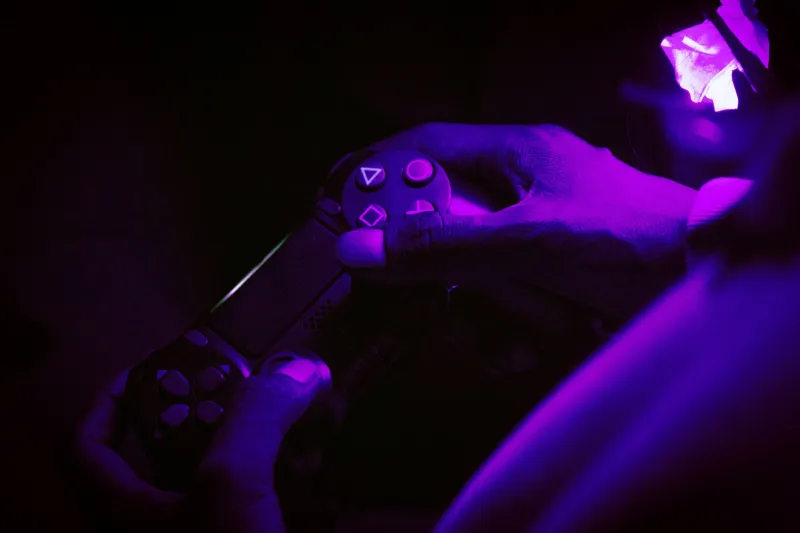
You know the moment. You're watching a stream, or you see a Reddit post, and someone's playing that game you've had wishlisted forever, and your hand literally reaches for a controller that isn't there. Your brain has already pre-loaded the experience. You've mentally played it a dozen times in the gaps between your actual sessions.
That phantom reach — that instinctive lunge toward an experience you've been holding in reserve — is your brain telling you something important: this hobby matters to you. Not just the playing, but the wanting to play. The anticipation. The curation. The planning.
Gaming isn't just what happens when you press start. It's the whole ecosystem around it: the trailers you watch at work when you're supposed to be in a meeting, the forum threads you read at midnight, the mental calculus of "okay, if I finish this questline by Friday, I could start the new one over the weekend." The wishlist is part of that ecosystem. It's not a graveyard of good intentions — it's a living document of your taste, your curiosity, and your ongoing enthusiasm for the medium.
Keep the List, Lose the Guilt
If there's one thing BiuACG is firmly in favor of, it's gaming without the anxiety tax. And the wishlist — when you stop treating it like a to-do list and start treating it like a personal hype collection — is one of the most anxiety-free parts of being a gamer.
You don't owe those games anything. They're not waiting on you with their arms crossed. They're just there, being interesting, being available whenever you're ready. Your wishlist is proof that you're engaged with gaming as a culture, not just a consumer grinding through a checklist.
So go ahead. Add that new indie title that looked incredible. Keep the sprawling open-world RPG you'll definitely get to eventually. Let the list grow. Let it breathe. Let it be the thing that reminds you, on the days when you only have 20 minutes to game, that there's always something to look forward to.
The phantom controller reach is just your enthusiasm refusing to clock out. Honestly? That's a pretty great problem to have.