Where Did Tuesday Go? The Wild Science of Why Gaming Eats Your Clock
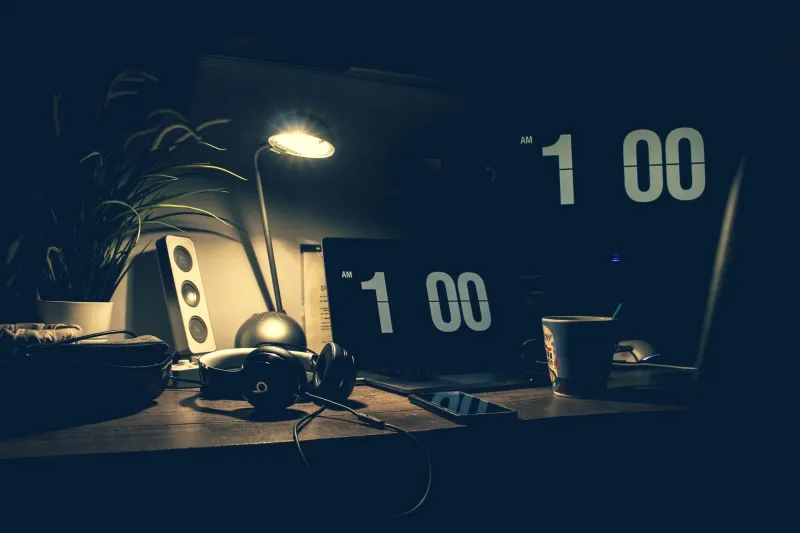
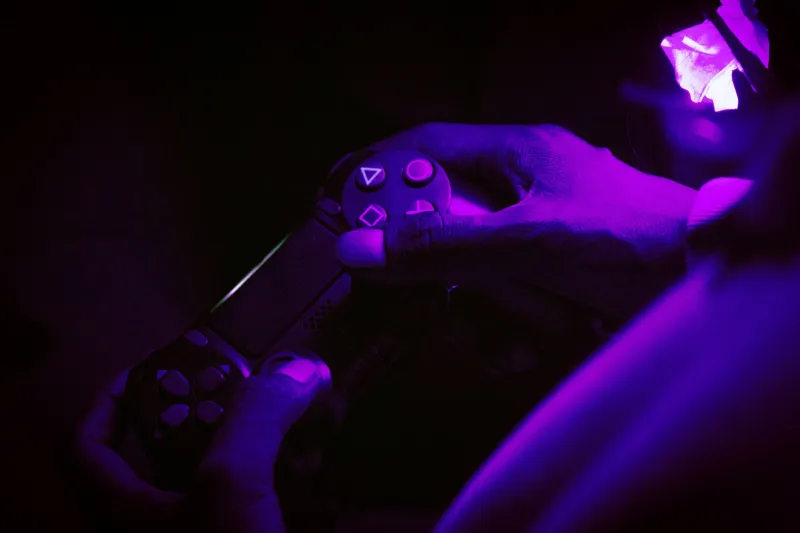
It starts innocently enough. You finish dinner, sink into the couch, grab the controller, and make yourself a very reasonable promise: one hour, maybe ninety minutes tops. Then something strange happens. The clock on the microwave says 11:47 PM, your snack bowl is mysteriously empty, and you have absolutely zero memory of the last four hours of your actual, real, adult life.
Welcome to temporal gaming collapse — the unofficial condition that has ended more sleep schedules than any alarm clock has ever saved.
The wild part? It's not a bug. It's basically your brain working exactly as designed.
Your Brain on Flow: The Ultimate Cheat Code
Back in the 1970s, a psychologist named Mihaly Csikszentmihalyi (yes, that's a real name, and no, we're not going to make you pronounce it) developed a concept called flow state — that zone of total absorption where a task is challenging enough to be engaging but not so brutal that it triggers panic. Athletes call it being "in the zone." Gamers call it "wait, when did it get dark outside?"
When you're fully locked into a game, your prefrontal cortex — the part of your brain responsible for self-monitoring, second-guessing, and remembering that you have a dentist appointment tomorrow — essentially clocks out. You stop tracking time because your brain has deprioritized everything that isn't the immediate task in front of you. The game becomes the whole world. Your actual world goes on mute.
This is why a two-hour session in a deeply immersive RPG can feel like twenty minutes, while a frustrating multiplayer match that lasts twelve minutes can feel like an eternity. Flow doesn't run on clock time. It runs on engagement.
Dopamine: The Real Villain (Or Hero?) of This Story
If flow state is the environment, dopamine is the fuel. Every notification ping, every loot drop, every level-up sound effect, every "Achievement Unlocked" pop-up — these are all tiny dopamine nudges designed to keep you engaged. And they work spectacularly.
Here's the sneaky part: dopamine doesn't just make things feel good. It actively warps your perception of time. Research on dopamine's role in time perception suggests that higher dopamine activity makes time feel like it's moving faster. Which means the more rewarding your gaming session is, the more efficiently your brain will erase any awareness that time is passing at all.
Game designers — whether they're conscious of it or not — have essentially built dopamine delivery systems. Variable reward schedules (the "maybe this chest has something great, maybe it doesn't" mechanic), escalating difficulty curves, narrative cliffhangers that make it impossible to stop at a chapter break — these are all precision instruments for keeping you in the flow lane and off the clock.
Not All Games Eat Time the Same Way
Here's something genuinely interesting: different genres distort time differently, and it's worth knowing your own weak spots.
Open-world games are the biggest offenders. When there's always one more quest marker, one more mountain to climb, one more NPC with a side mission about their missing goat, the game creates a horizon that perpetually recedes. You never feel "done" because the game never feels done. Time disappears into that infinite middle distance.
Roguelikes and dungeon crawlers operate on what some researchers call the "just one more run" loop. Each session resets, which tricks your brain into thinking the next one will be short. Spoiler: it won't be.
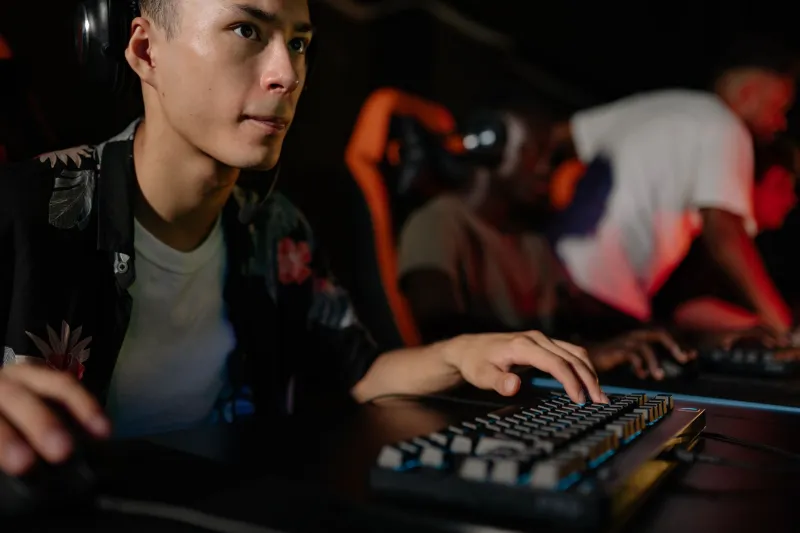
Competitive multiplayer games — your battle royales, your team shooters — create a different kind of time warp. The adrenaline spike of high-stakes competition can compress your perception so severely that a thirty-minute match feels like five. Then you immediately queue again because your brain is still buzzing.
Puzzle and casual games, interestingly, tend to create less severe time distortion — unless you're the kind of person who takes puzzle games personally, in which case, all bets are off.
So Should You Fight It?
Here's where BiuACG plants its flag: no, not really. Flow state is genuinely good for you. It's associated with lower stress, improved mood, and a sense of accomplishment that carries over into the rest of your life. The goal isn't to destroy the magic — it's to make sure the magic doesn't accidentally cancel your morning.
The trick is building awareness around the flow state rather than trying to interrupt it.
Practical Moves for Keeping One Eye on the Clock
Set an alarm with a buffer. If you want to stop at 10 PM, set an alarm for 9:40. That gives you twenty minutes to find a natural stopping point — finishing a dungeon, completing a mission, reaching the next save point — without the jarring hard stop that makes you feel like the game yanked the rug out from under you.
Use your console's built-in session tracking. Both PlayStation and Xbox have screen time features that'll show you exactly how long you've been playing. Check it once per session, not obsessively, but enough to maintain a loose grip on reality.
Pick games that respect your time. Some games are designed with natural stopping points. Others are explicitly designed to have none. Know which type you're booting up and calibrate your expectations accordingly.
The "one more thing" rule. Instead of saying "I'll stop when I feel like stopping" (you won't), decide in advance: one more quest, one more match, one more level. Specificity is everything here. "One more thing" is containable. "A little longer" is how Tuesday disappears.
Eat something before you start. This sounds unrelated, but hunger is one of the first cues that breaks flow state in an unpleasant way. A snack before you sit down reduces the chance that you'll suddenly realize you're starving at midnight with no idea how it happened.
The Takeaway (Before You Lose Another Evening)
The reason your gaming sessions feel shorter than they are isn't a character flaw, a discipline failure, or a sign that you need to "get your priorities straight" (thanks, internal critic). It's your brain doing something genuinely remarkable — achieving a state of total presence that most people struggle to access in any other area of their lives.
The goal isn't to feel guilty about losing track of time. The goal is to lose track of time on purpose, within a window you've actually chosen, so that the version of you who has to wake up tomorrow morning doesn't completely hate the version of you who was having so much fun tonight.
Play more. Stress less. Just maybe set that alarm first.