Nothing to Do, Nowhere to Be: The Quiet Revolution of Games Where You Just... Exist
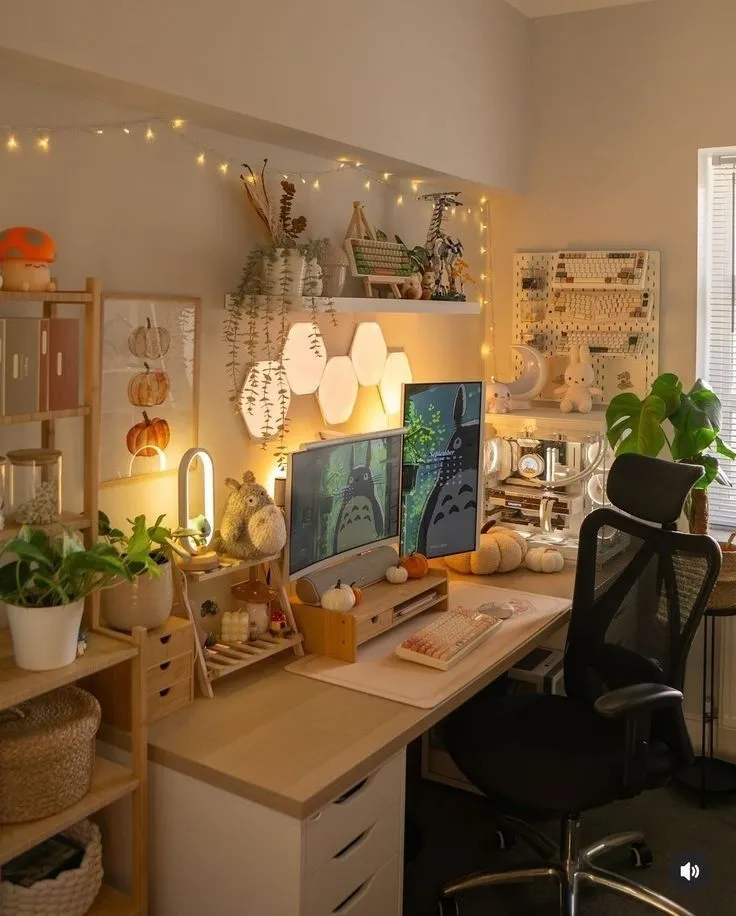
Photo: cozy gaming setup warm lighting person relaxing with controller, via i.pinimg.com
Let's be honest. When someone asks you to describe your most memorable gaming moment, there's a decent chance it doesn't involve a last-second sniper shot or a ranked match comeback. There's also a decent chance it involves something embarrassingly mundane — like the time you spent forty-five minutes in Stardew Valley watching your character stand next to a duck pond while the in-game rain tapped softly on your farmhouse roof.
No stakes. No enemies. Just vibes.
And here's the thing: that moment might have been the best gaming experience you've had in years.
The Competitive Hamster Wheel Is Very Loud
The gaming industry has spent decades convincing us that bigger always means better. More explosions, tighter skill gaps, faster matchmaking, higher stakes. The leaderboard is always watching. The ranked season never sleeps. Your teammates are always two bad rounds away from a full meltdown in the chat.
For a lot of players — especially adults juggling jobs, kids, and the general chaos of American life — that energy is exhausting before the game even loads. You sit down to decompress and end up more stressed than when you started. That's not a bug in competitive gaming, it's a feature. Tension drives engagement. But tension also drives people away from gaming entirely.
Which is exactly why a quiet little counterculture has been growing for years, one cozy game at a time.
Enter the Nothing-Happens Genre (In the Best Possible Way)
Call it cozy gaming, narrative-driven exploration, or just "games where a raccoon can't sneak up and ruin your afternoon." Whatever the label, the category is booming. Titles like Stardew Valley, A Short Hike, Unpacking, Spiritfarer, and Animal Crossing: New Horizons have collectively sold tens of millions of copies to players who, by all traditional gaming metrics, shouldn't be that invested.
There's no final boss in Unpacking. You literally just... unpack boxes and arrange someone's belongings across different chapters of their life. And yet people have cried playing it. Real tears. Over a spatula placement.
A Short Hike gives you a small island, a pair of hiking boots, and the loose goal of reaching a mountain summit. That's it. The whole game takes about two hours, features no combat, and somehow manages to feel more emotionally complete than franchises with twenty-year lore bibles.
How? Why? What is happening?
The Science of Doing Nothing Productively
Psychologists have a term for the mental state these games tend to produce: low-demand engagement. Your brain is active — you're making small decisions, exploring spaces, absorbing story — but you're not under threat. There's no cortisol spike when you miss a jump in A Short Hike. You just float back up and try again, no penalty, no judgment.
For adults who spend their days in high-demand environments (deadlines, difficult conversations, the existential dread of checking email), this kind of play is genuinely restorative. It's the gaming equivalent of a long walk with good music. You're present without being pressured.
Stardew Valley in particular has been cited by players in gaming communities across Reddit and Discord as a go-to for anxiety management — not because it's therapy, but because it creates a reliable, gentle rhythm. Plant seeds. Water crops. Talk to townsfolk. Go to sleep. Wake up. Do it again. It's the structured calm that a lot of people can't find in their actual daily lives.
The Social Secret Nobody Talks About
Here's the part that doesn't get enough attention: these games are quietly becoming some of the best social gaming experiences around — even when they weren't designed that way.
There's a specific kind of hangout energy that emerges when you fire up a cozy game with a friend in the room. Nobody's competing. Nobody's performing. You're just both sort of existing in a digital space together, occasionally pointing at the screen and saying "wait, what did that NPC just say?" or "oh no, the crops are dying."
Stardew Valley's multiplayer mode, for example, has become a genuine couples' and friends' activity for people who don't typically game together. One person handles the animals. The other mines. Nobody's yelling. It's practically domestic.
And when you're playing something like Spiritfarer — a game about ferrying the souls of deceased friends across a beautiful ocean — the conversations that happen between players in the same room tend to get surprisingly real. Games that deal with loss, transition, and belonging create space for human connection that most shooters simply don't.
The Stories That Live in the Margins
Narrative-driven cozy games also do something that blockbuster titles often fumble: they tell stories in the white space.
Unpacking never shows you a single character's face. There's no dialogue. But by the time you've moved through seven different living spaces across a fictional life, you know this person — their heartbreaks, their growth, their complicated relationship with a childhood bedroom. The storytelling happens entirely through object placement and implication.
That's a masterclass in show-don't-tell, and it lands harder than most cinematic cutscenes precisely because you were never told how to feel. You just... figured it out, quietly, while arranging a bookshelf.
These are the gaming moments people remember at 2 AM when they can't sleep. Not the clutch plays. The quiet ones.
Making the Case for Low-Stakes Gaming
If you've been avoiding cozy or narrative games because they feel "too slow" or "not really gaming," consider the possibility that you've been running on the competitive treadmill for so long that you've forgotten what gaming felt like before the stakes got turned all the way up.
Pick up A Short Hike on a Sunday afternoon. Give yourself two hours and no agenda. Notice what happens to your shoulders when there's nothing trying to kill you.
The couch potato paradox isn't really a paradox at all. The most memorable gaming stories often happen in the moments of stillness — when you're not rushing toward an objective, not grinding for a reward, not performing for an audience. You're just there, in a world that asks nothing of you, and somehow that turns out to be exactly enough.
Sometimes the best thing a game can do is give you permission to exist without a purpose. In a world that demands constant productivity, that's not a small thing. That's kind of everything.