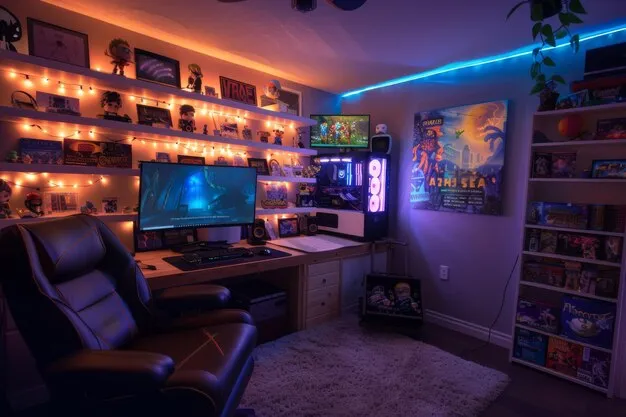
Sitting Down to Stand Up: How Gaming Culture Is Quietly Turning Couch Dwellers Into Active People

Photo: Evgeny2665, CC0, via Wikimedia Commons
Let's be honest — when someone says "hardcore gamer," the image that pops into most people's heads isn't exactly an athlete. It's a person horizontal on a sectional sofa, surrounded by empty energy drink cans, squinting at a screen at 2 a.m. on a Tuesday. We've all seen the memes. We've maybe been the meme.
But here's the thing: that stereotype is aging about as well as a 2009 Facebook status update. A growing pile of research and a whole lot of real-world stories suggest that gaming culture — yes, the same one built around sitting still and pressing buttons — is actually nudging millions of Americans toward healthier, more active lifestyles. Weird? Absolutely. True? Surprisingly, yes.
The Numbers Don't Lie (Even When They're Inconvenient)
A 2020 study from the Nielsen Games consumer research group found that over 65% of American adults play video games regularly. That's not a niche hobby — that's most of the country. And when you zoom in on what those players are actually doing around their gaming, things get interesting.
Research published in the Journal of Health Psychology found that players who participated in gaming communities — whether online guilds, local gaming clubs, or even just a regular group chat — reported higher levels of social activity, better sleep hygiene, and a greater likelihood of pursuing physical hobbies compared to non-gamers. The key phrase there is "gaming communities." Solo gaming in a vacuum is one thing. Gaming as a social identity is something else entirely.
When you belong to a group, even a digital one, you start doing group-people things. You make plans. You show up places. You occasionally go outside.
From Raid Night to Road Trips: The Social Pipeline
Ask anyone who's been deep in a gaming community long enough, and they'll tell you — the friendships that start in-game rarely stay there. What begins as a Discord server for coordinating dungeon runs has a funny habit of turning into weekend hangouts, road trips to gaming conventions like PAX or DreamHack, and yes, actual physical activities.
Take Marcus, a 29-year-old from Austin who spent most of his mid-twenties gaming competitively online. "My guild started doing meetups," he says. "First it was just dinner. Then someone suggested we do a 5K together as a joke, wearing gaming-themed costumes. We did it. Now we do it every year. I've run four 5Ks because of people I met in a fantasy RPG. That's insane to me."
Marcus isn't an outlier. Gaming conventions routinely draw hundreds of thousands of attendees who walk miles across convention floors, participate in live tournaments, and spend entire weekends on their feet. The gaming community has also spawned massive charity events like Games Done Quick, where players collectively raise millions for health-related causes while staying active for days at a stretch.
The Psychology of the Respawn: Gaming Builds Resilience That Transfers
Here's where it gets genuinely fascinating. Psychologists who study motivation have started paying close attention to gaming mechanics — specifically, how the concept of "leveling up" and incremental progression rewires how players think about effort and reward.
Dr. Jane McGonigal, a game designer and researcher, has written extensively about how gaming builds what she calls "urgent optimism" — the belief that a problem is solvable if you keep trying. Players who internalize this mindset don't just apply it to boss battles. They apply it to their gym routines, their meal prep habits, their mental health journeys.
Apps like Habitica have literally gamified personal wellness, turning daily exercise and healthy eating into quests with experience points. The app boasts millions of users, many of whom report sticking with health goals longer than they ever managed with traditional methods. Because when your workout is also a side quest, skipping leg day feels like abandoning your party.
Dance Pads, Ring Fit, and the Blurring Line Between Gaming and Exercise
And then there's the increasingly blurry border between gaming and flat-out physical activity. Nintendo's Ring Fit Adventure turned core workouts into RPG battles. Beat Saber on VR headsets has people swinging their arms hard enough to break a genuine sweat. Dance Dance Revolution — yes, it's still a thing, and yes, it's still exhausting — has been cited in multiple studies as a legitimate aerobic activity.
Meta's VR fitness apps are logging millions of active minutes per month. Pokémon GO, despite being several years old, still drives players out of their homes and into parks, neighborhoods, and community events. In 2016, the American Heart Association actually praised the game for encouraging walking among people who otherwise struggled to find motivation to move.
None of this was the original point of any of these games. The point was fun. The fitness was a side effect. And honestly? That might be exactly why it works.
The Real Secret: Fun Is the Best Fitness Hack
Here's the uncomfortable truth that most wellness content skips over: people are terrible at doing things they don't enjoy, no matter how good those things are for them. Gym memberships get abandoned. Diets collapse. Running streaks end the moment it gets cold outside.
But people will absolutely drag themselves across a convention center in uncomfortable cosplay for twelve hours straight because they're having a blast. They'll walk ten miles through a city chasing Pokémon because it doesn't feel like exercise. They'll do forty-five minutes of VR sword fighting because it's fun.
Gaming culture, at its core, is built around the pursuit of enjoyment. And when enjoyment becomes the vehicle for movement, socialization, and community, the usual friction points of "healthy living" just kind of... dissolve.
So the next time someone gives you side-eye for spending your weekend gaming, feel free to remind them that you've got a 5K on the calendar, a convention trip booked with your crew, and a Ring Fit workout scheduled for Tuesday. The couch potato era is over. Or at least, it's a lot more complicated than it used to be.
Play more. Stress less. And apparently, move more — even if you're doing it in a foam sword costume.